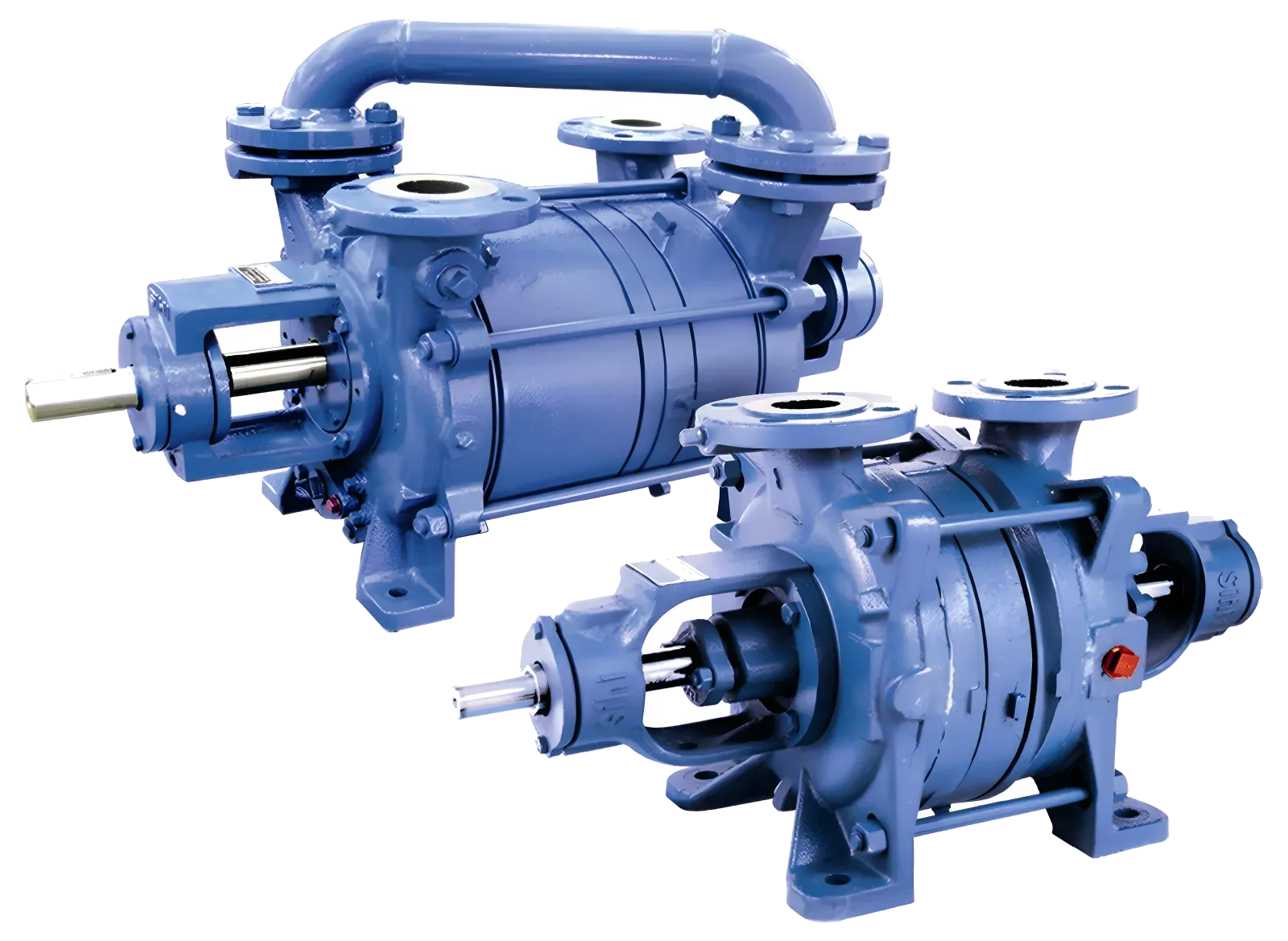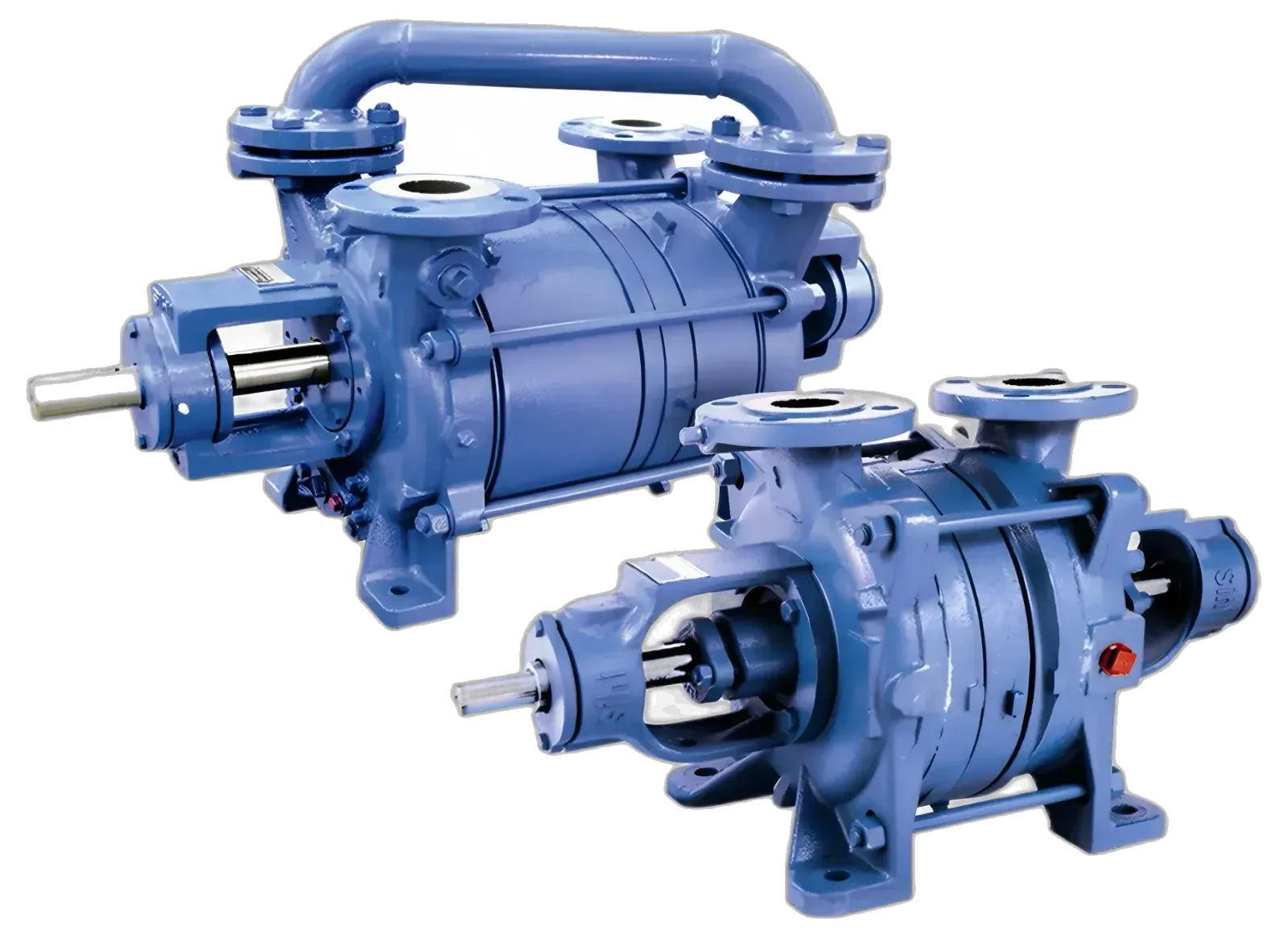
Liquid-ring vacuum pumps and compressors, and complete systems
22 Flowserve (Sihi) products on DRN’s shelves, across 2 equipment families, in 2 product lines.
- ARO
- Ebara
- Flowserve (Sihi)
- FMC Technologies
- Grundfos
- Labour Taber
22 Flowserve (Sihi) products on DRN’s shelves, across 2 equipment families, in 2 product lines.
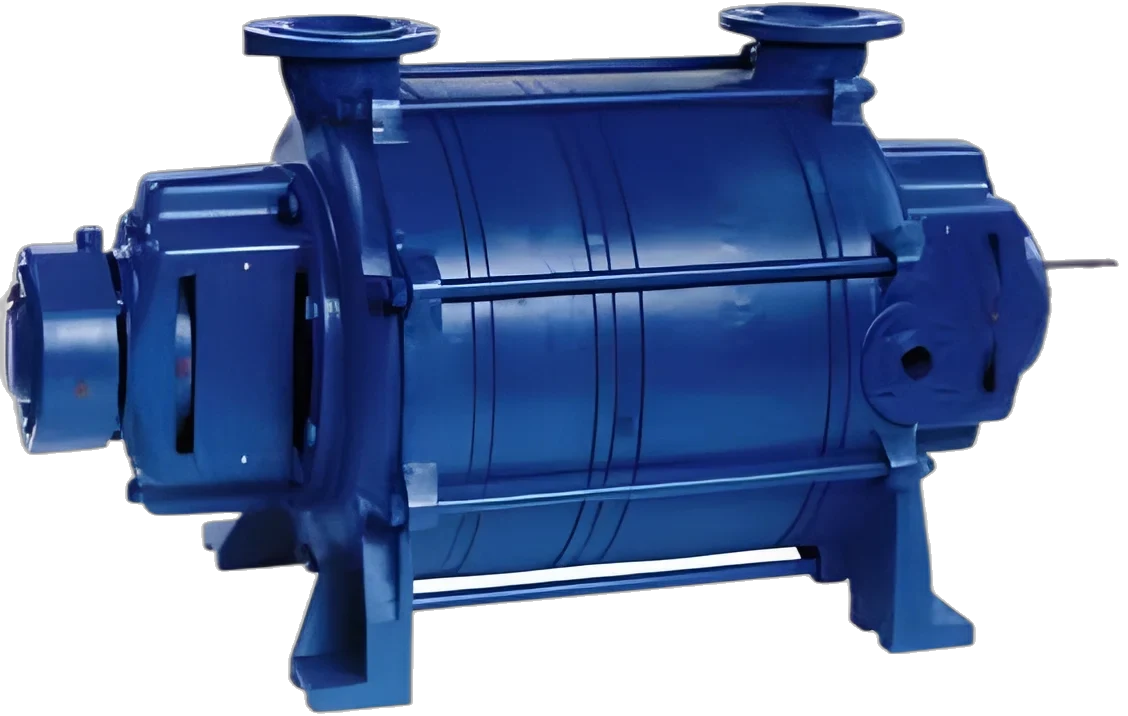
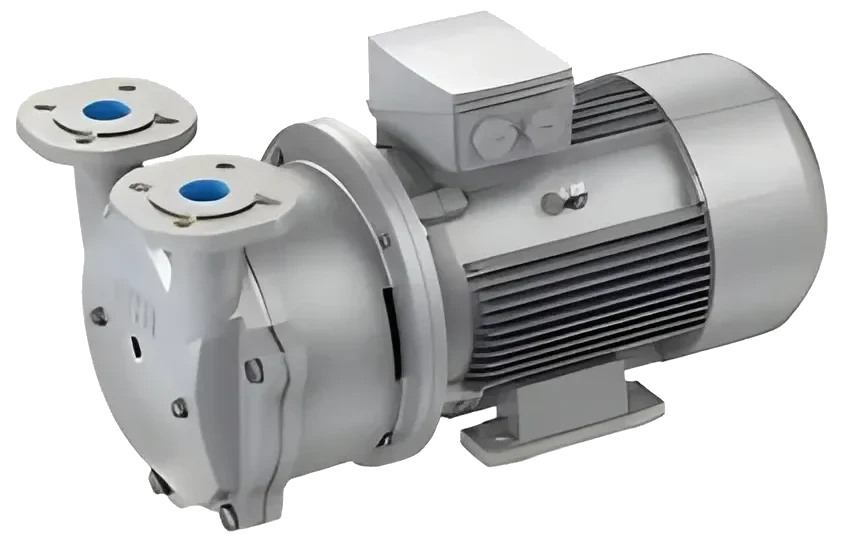
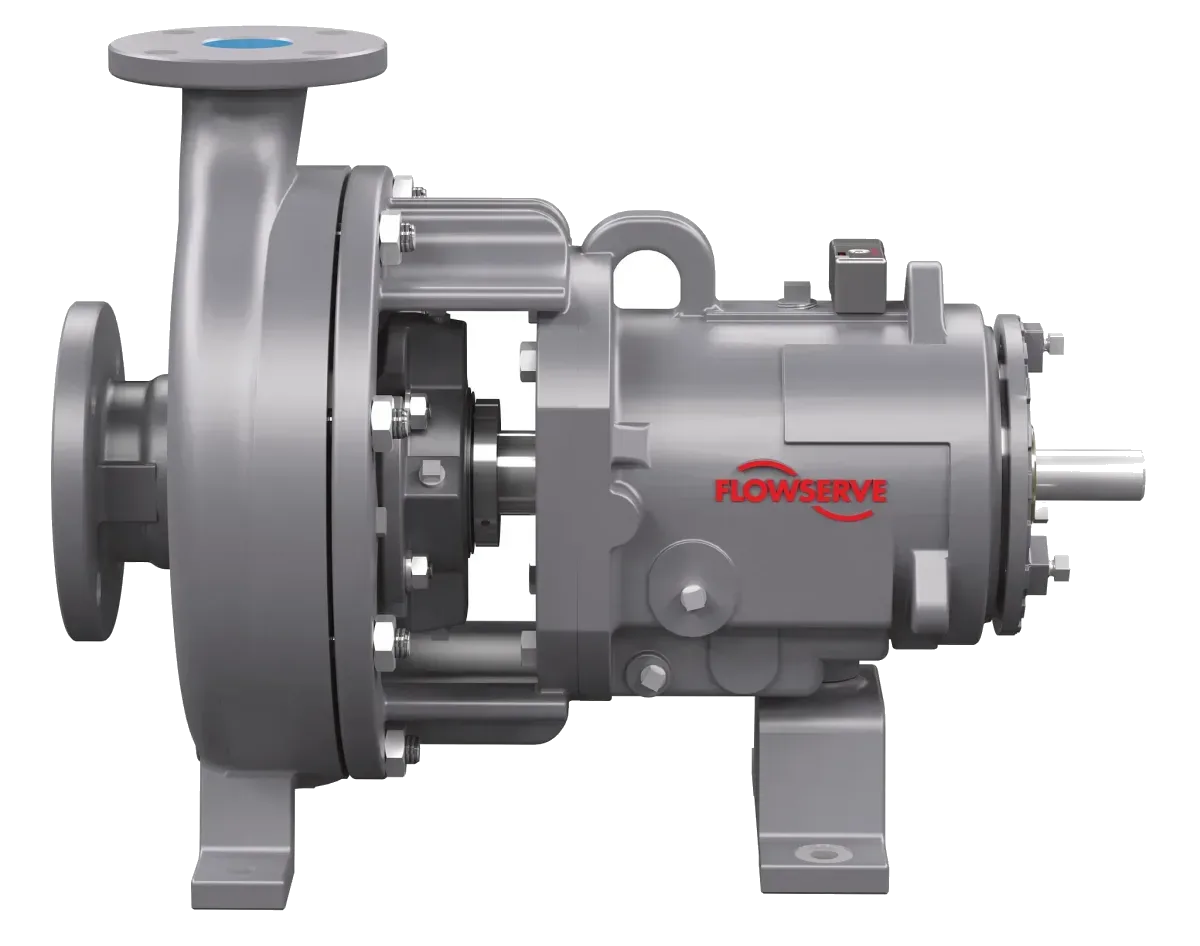
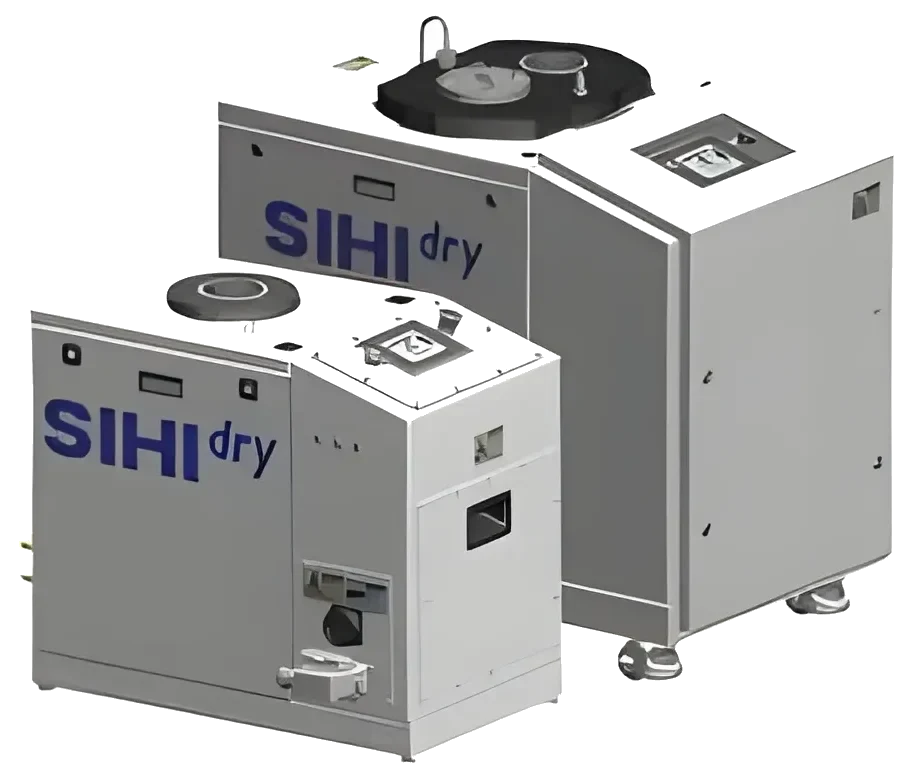
Four families cover the range. Liquid ring vacuum pumps: the close-coupled LEMD to 450 m³/h and the two-stage LPH and LPHX to 10,350 m³/h and 33 mbar. Liquid ring compressors: the KPH series to 3,400 m³/h and 12 barg. Dry vacuum: SIHI Boost screw boosters and SIHI Dry claw pumps. And Modular D and Modular X packages, which arrive skid-mounted with separator, heat exchanger, controls and piping already built and tested.
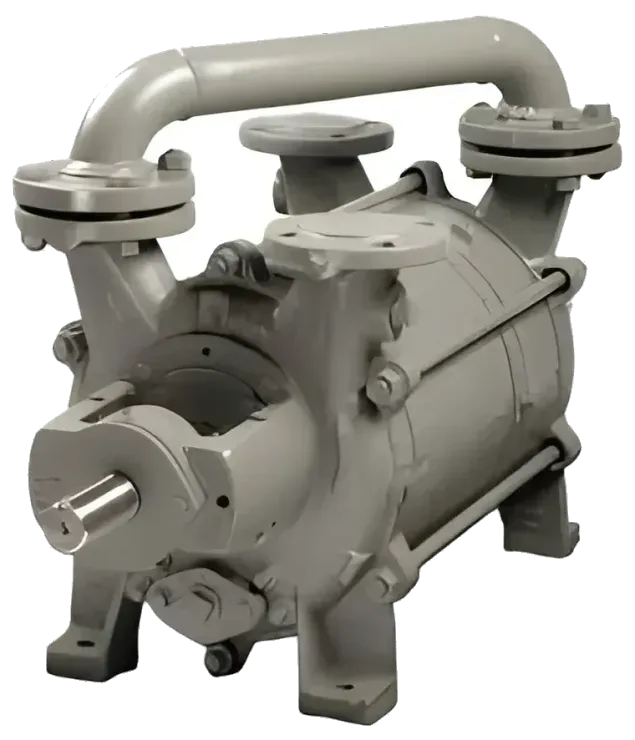
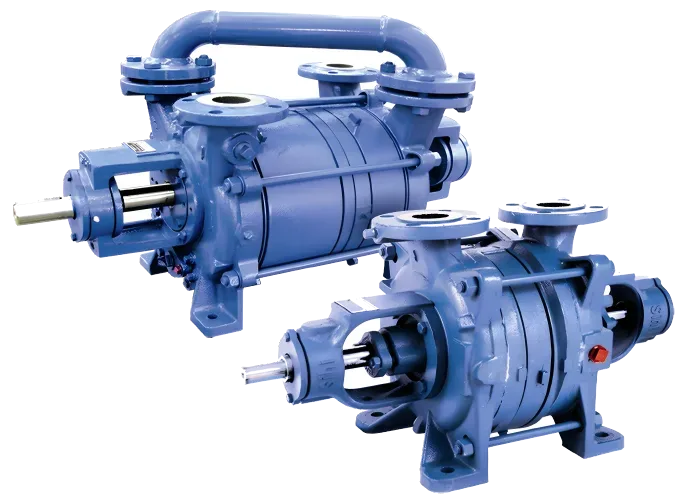
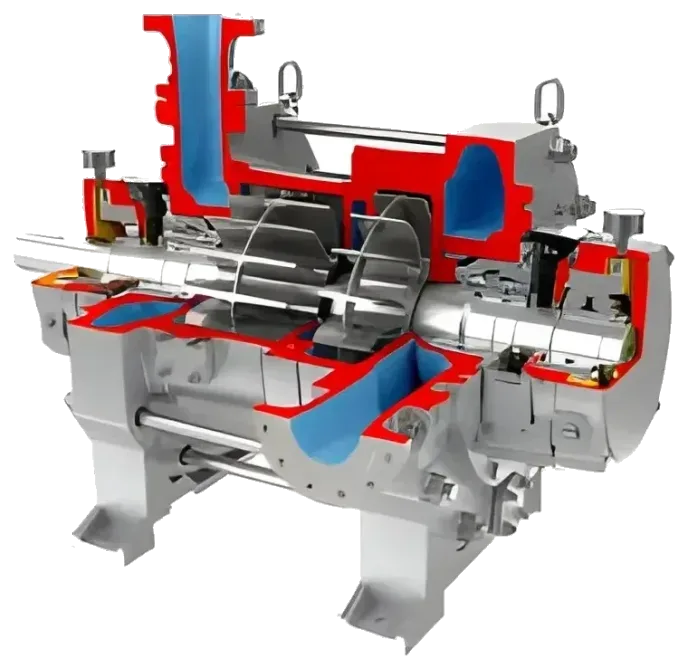
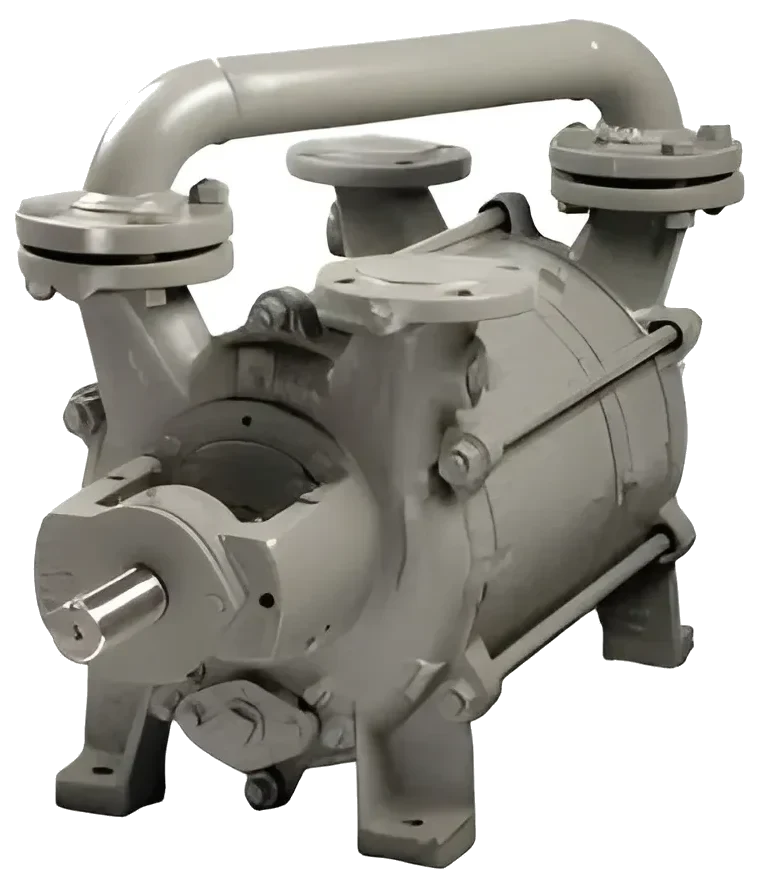
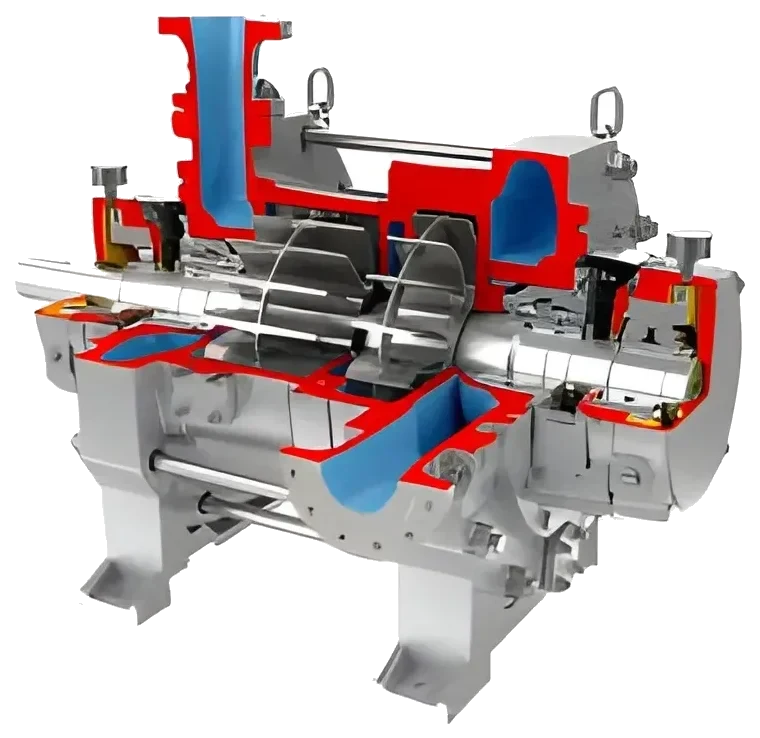
A liquid ring vacuum pump holds an impeller off-centre inside a cylindrical casing partly filled with a service liquid, usually water. As the impeller turns, centrifugal force throws that liquid out against the casing wall and forms a rotating ring. Crescent-shaped pockets open and close between the impeller vanes and that ring, drawing gas in on one side and discharging it on the other. The ring is both the seal and the compression medium, and that is what separates this design from a dry machine. Three consequences follow. The compression chamber carries no lubricant, so the pumped gas stays oil-free. The service liquid absorbs the heat of compression, so the process runs close to isothermal and discharge temperatures stay low. And because liquid is already present in the chamber, condensable vapour and slugs of entrained liquid pass through without the damage they would do elsewhere. That combination is why liquid ring pumps are specified for wet, loaded and chemically aggressive duty: solvent recovery, vacuum distillation, pulp dewatering, vacuum packaging and steam condensing. It also makes them a sound choice for flammable gas, since no hot dry surface sits in the compression path. The same water that makes the design tolerant also sets its floor: the vapour pressure of the service liquid caps the vacuum a liquid ring pump can reach, which is why deep-vacuum duty pairs one with a booster. Flowserve SIHI builds this technology as the close-coupled LEMD series and the two-stage LPH and LPHX series. DRN sizes both against your gas load and your vacuum level rather than against a catalogue page, because service liquid temperature and vapour fraction move the curve far more than the nameplate does.


The difference is how deep a vacuum each one reaches, and what it costs to get there. The single-stage LEMD series compresses in one step. It reaches roughly 25 inches of mercury, about 67 mbar absolute, moves up to 450 m³/h (265 cfm) and accepts inlet gas to 200 °C (392 °F) in sizes from DN25 to DN65. One stage means fewer parts, a smaller footprint and a close-coupled build that drops into tight plant rooms. The two-stage LPH and LPHX series compress in two successive steps. They reach roughly 29.5 inches of mercury, about 33 mbar absolute, and scale to 10,350 m³/h (6,090 cfm) in sizes from DN40 to DN250. The second stage does the deep work, so at low suction pressure the machine is markedly more efficient and draws less service water than a single stage pushed to its limit. The selection rule is simple. If your duty needs 25 inches of mercury or less, one stage is the economical answer. Above that, or where energy and water consumption at deep vacuum matter, specify two stages. What the rule does not settle is flow. Vacuum level and volume flow have to be chosen together, and the gas load at operating pressure is what actually sizes the pump. Send DRN your process conditions and we will work out the duty point with you.
Picture the duty before the machine. If your process tolerates no moisture and no trace contamination, needs vacuum deeper than roughly 0.01 mbar, sits in a room that freezes, or runs where service water is scarce or expensive to treat, a dry pump is the right answer. The SIHI Boost screw boosters and SIHI Dry claw pumps cover that ground: no service liquid in the compression chamber, no wastewater to dispose of, and nothing in the gas path to react with your process. The promise of liquid ring runs the other way. Choose LEMD, LPH or LPHX when the inlet carries condensable vapour such as steam or solvent, when slugs of liquid arrive with the gas, when the gas is corrosive, when the atmosphere is flammable, or when moderate vacuum has to be reached at the lowest capital cost and water is already on site. The proof is in the chamber. A dry machine compresses against metal and nothing else, which is why its ultimate pressure is so low and why carried-over liquid or a condensing load is a problem for it. A liquid ring machine compresses against water, which is why it shrugs off both and why it stops short of ultra-high vacuum. The LEMD series is also offered in ATEX category 2 execution, without flame arresters. In practice, most chemical, food and pulp and paper duties in Quebec are served well by liquid ring, while pharmaceutical, semiconductor and coating work is where dry vacuum earns its place. Tell DRN what the gas is and we will tell you which family fits.
Yes, provided the materials are chosen for the gas rather than for the catalogue. SIHI builds the same hydraulic geometry in a wide range of materials. Cast iron is the standard for general, non-corrosive service, and ductile iron carries higher mechanical loads. For corrosive duty the range moves up through 316 stainless steel for moderate attack, duplex stainless for chloride-bearing streams and higher strength, Hastelloy C for strong acids and chlorine compounds, and bronze for seawater and marine work. Where a wetted surface needs isolating rather than upgrading, epoxy coatings and rubber linings are available, and special impeller coatings are offered on the LEMD series. The advantage of that range is that corrosion resistance is specified part by part instead of forcing a whole-machine upgrade. The benefit is a service life you can plan around: the pump wears at the rate the material choice predicts, not at the rate the process dictates. Five things decide the specification. The chemical composition of the gas. Its concentration and temperature. Whether moisture is present, since many streams turn aggressive only once wet. Whether exposure is continuous or intermittent. And the service life the installation is expected to deliver. Our team has specified materials for corrosive duty in chemical plants, refineries and pulp mills, and works with SIHI engineering when a stream falls outside the standard tables. Send us a gas analysis with temperatures and we will come back with a material recommendation and the reasoning behind it.
No. A liquid ring pump must never run without its service liquid, and dry running is the most expensive avoidable failure on this equipment. The liquid is not an accessory. It forms the ring that creates the vacuum, it absorbs the heat of compression, and it lubricates the non-metallic parts. Take it away and vacuum is lost immediately, the casing overheats within minutes, the mechanical seal is destroyed, the impeller scores the casing and, in bad cases, the casing itself is damaged. Most warranties will not cover the episode. The remedy is interlocks, not vigilance. Every liquid ring installation should carry a flow switch on the service liquid that stops the pump the moment flow ceases, a temperature switch to catch overheating, a start permissive so the pump cannot run before water flow is proven, and a low-level switch in the separator. Operators should be told plainly what dry running does, because the failure is silent for the first few seconds. Water quality is the slow version of the same problem. Aim for hardness below 200 ppm as calcium carbonate, pH between 6.5 and 8.5, a supply temperature of 10 to 21 °C (50 to 70 °F), solids filtered above 50 microns, and chlorides below 250 ppm, lower again on stainless construction. Hard water scales the internals, low pH and high chlorides corrode them, and warm water directly limits the vacuum you can reach. Dry pumps are the exception: SIHI Boost and SIHI Dry machines carry no service liquid at all. DRN designs the service water skids and interlocks for liquid ring fleets.
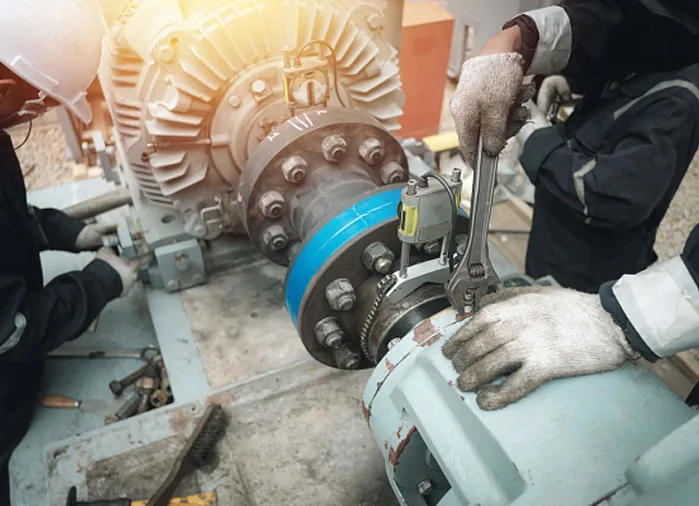
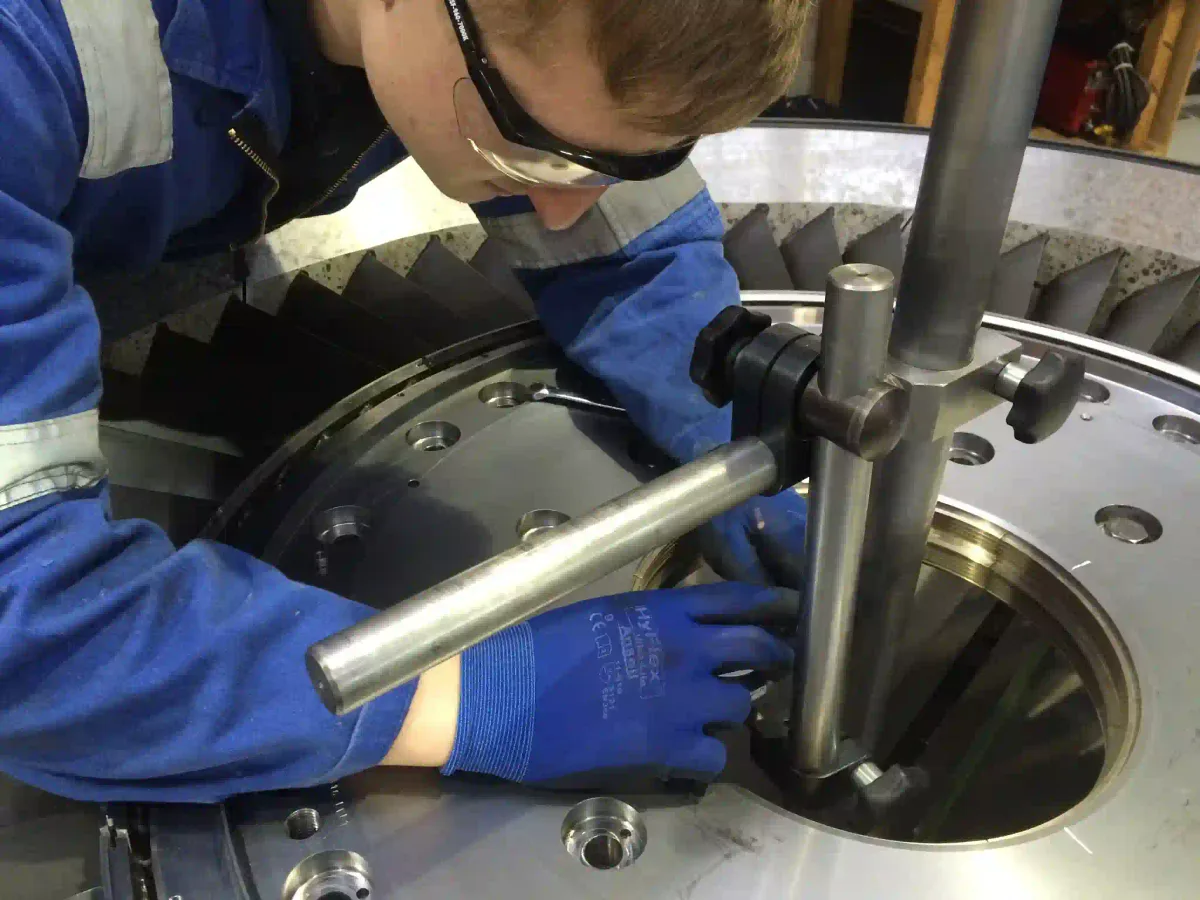
The schedule is simple, and most of it is checking rather than stripping. Daily, watch the bearing temperatures, which should stay below 60 °C (140 °F), listen for unusual noise or vibration, confirm service water flow and temperature, and note the discharge pressure and the vacuum level. Weekly, inspect the packing or mechanical seal for leaks, check the bearing lubricant, clean the strainer baskets and confirm the automatic controls still act. Monthly, lubricate the bearings to the manufacturer's schedule, check coupling alignment, read the motor current and test the pressure switches and thermocouples. Quarterly, inspect the mechanical seal, check the heat exchanger for fouling, clean the separator tank and look at the impeller through the inspection port where one is fitted. Annually, the machine opens far enough for a full inspection and clean: replace the mechanical seal, check shaft and bearing condition, inspect the impeller for wear and corrosion, pressure test the circuit and recalibrate the instruments. Every three to five years it earns a full overhaul, with impeller and bearings replaced, sealing faces machined and refinished, every gasket and O-ring renewed, and a performance test before it goes back into service. The less obvious part is that the interval is set by water more than by hours: scaling and chloride attack shorten a rebuild cycle far more than running time does. DRN runs the preventive maintenance programmes and the complete overhauls on this equipment, with original SIHI parts.
It depends on how far the machine sits from a standard build, and the spread is wide. What we hold in our Mirabel stock ships the same day or inside 48 hours: common LEMD sizes, the standard LPH sizes in DN80, DN100 and DN125, the wear parts that strand a pump (mechanical seals, impellers, bearings), service water accessories and small vacuum packages. Standard factory products run 4 to 8 weeks: LEMD in standard materials, LPH and LPHX in cast iron in common sizes, standard Modular D systems and the usual configurations. Engineered products run 10 to 16 weeks. That band covers special materials such as 316 stainless, duplex or Hastelloy, large LPH pumps from DN150 up, custom Modular X systems, fully engineered vacuum packages, SIHI Boost dry systems and KPH compressor units. Heavily customised systems run 16 to 24 weeks: multi-pump installations, unusual process requirements, rare materials or coatings. Two things shorten that in practice. Holding the wear parts for the pumps you already run turns a breakdown into a same-day repair instead of a factory order. And rebuilding an existing SIHI pump is usually faster than replacing it, work DRN performs in-house with original SIHI parts, alongside preventive maintenance programmes and performance testing. Give us the model number on the nameplate and we will tell you what is on the shelf today. If the machine is no longer in production, send the serial number as well: DRN keeps rare and older parts that are hard to source elsewhere, and the parts list often outlives the model.
Flowserve (Sihi) holds 16 brands.
Argus · Automax · Byron Jackson · Durco · Edward · INNOMAG · Kammer · Limitorque · MOGAS · McCANNA · Nordstrom · PacSeal · Valtek · Worcester · Worthington
Before: a pump picked off a curve, running warm, drinking service water and short of the vacuum the process actually needs. After: a duty point worked out from your gas load, your service water temperature and your condensable fraction. The bridge is a conversation with an engineer who sizes these machines every day. Call 450-434-4000 and you will have an answer inside the business hour.
DRN holds wear parts for the most requested models on the shelf and sources the rest, including machines whose manufacturer no longer supports the line. Send the model number and what you need; a specialist answers with what is available.