(450) 434-4000
DRN Industriel
FR

Industrial pumps: centrifugal, diaphragm and metering
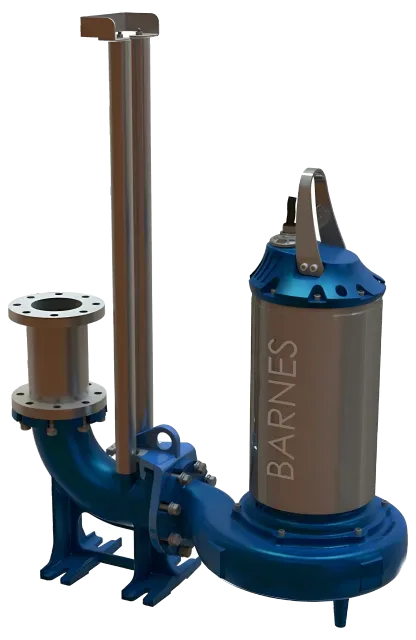
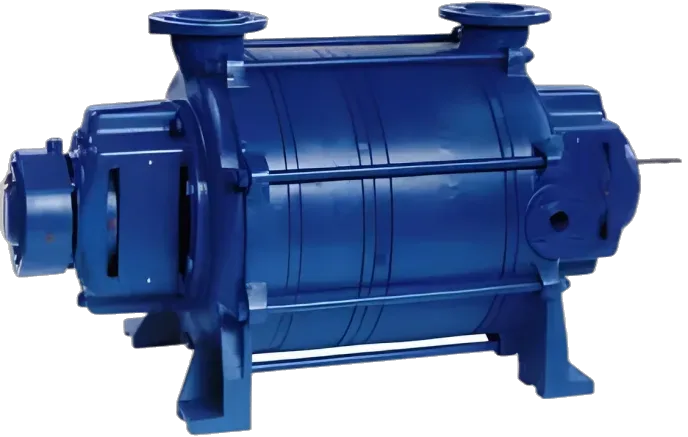
An industrial pump is settled by a duty point, not by a catalogue sheet. Flow, total head, available NPSH, viscosity, temperature and solids content together decide the impeller type, the wetted materials and the sealing arrangement. Shift any one of those six and the pump runs off its curve, wears early and stops production.

DRN Industriel stocks the families that cover that spread: horizontal and vertical centrifugals, self-priming and submersible units, sealless magnetic drive pumps, air-operated diaphragm pumps and positive displacement metering pumps. Our specialists have sized, selected and troubleshot this equipment across Quebec and Eastern Canada for more than 35 years.


How a centrifugal pump works

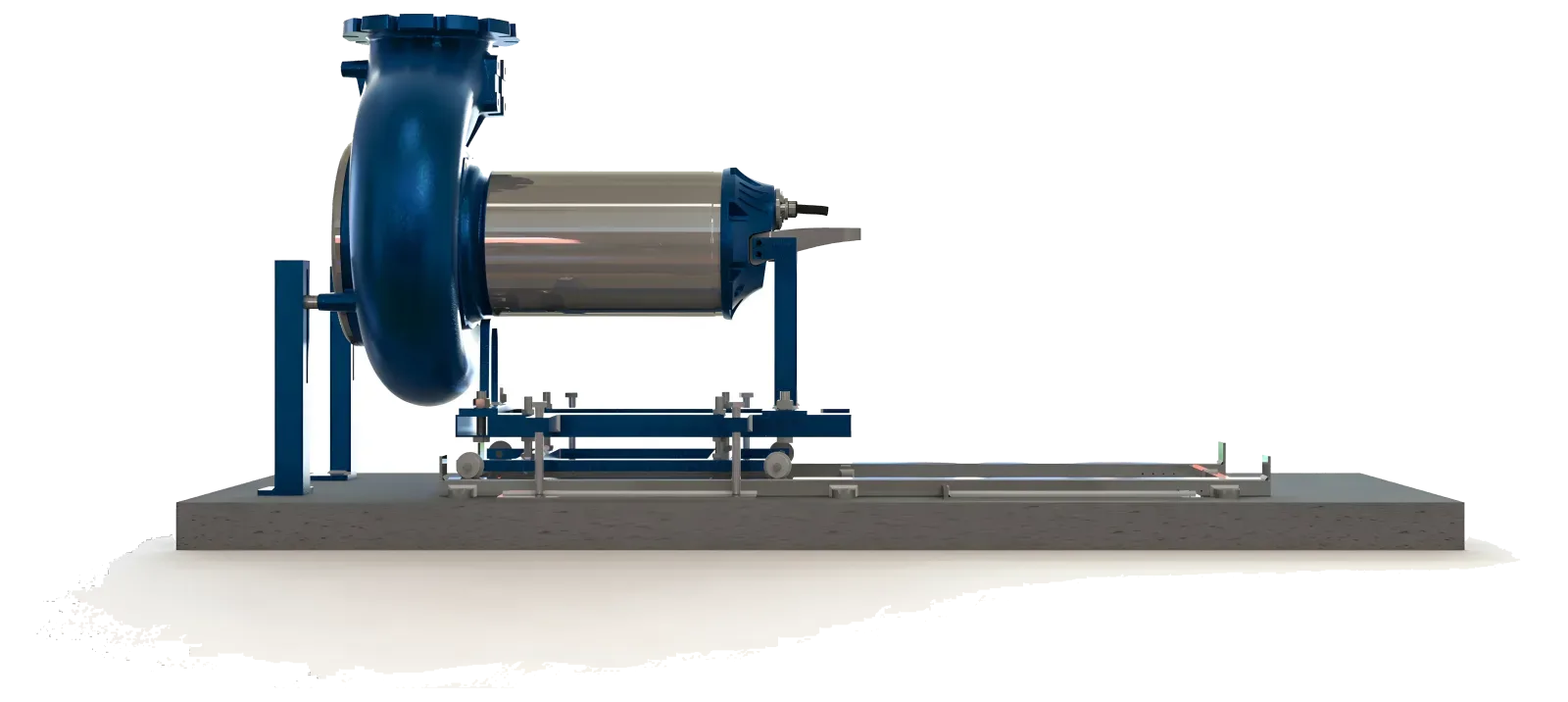
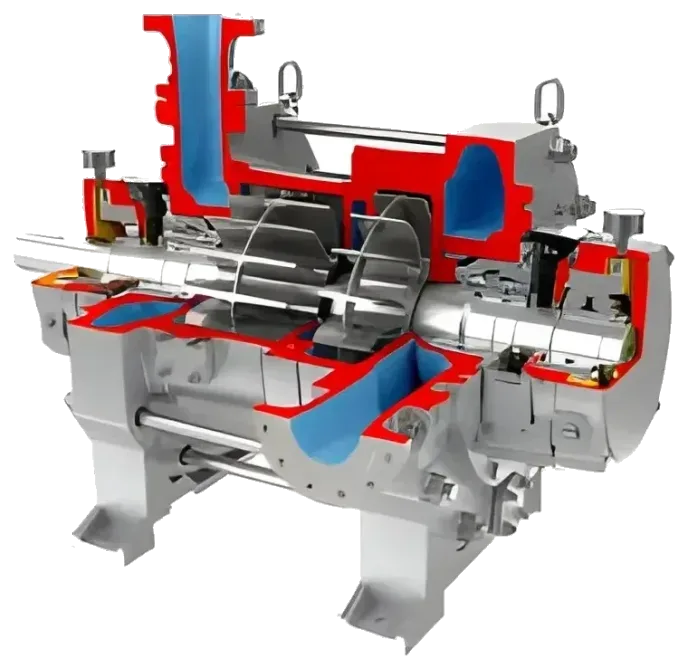
A rotating impeller adds kinetic energy to the liquid, and the volute converts that velocity into pressure. Flow is therefore a function of the back pressure the system imposes, and every impeller traces its own flow-head curve. Efficiency peaks at a single point on it. Sizing means landing that point on the real process demand rather than on the most cautious design figure.

From duty point to installed pump

Send a duty sheet carrying the flow, the head, the available NPSH, the nature of the liquid, the temperature and the solids content. Our specialists match those figures against the curves of the lines we stock, check the wetted materials and the sealing arrangement, then propose an impeller and a motor. Answer inside one hour during business hours, parts on the shelf, same-day shipping, and a shop for repair and full overhaul.

Frequently asked questions about centrifugal pumps

A centrifugal pump adds energy to the liquid by spinning an impeller, then turns that velocity into pressure in the volute. Its flow is never a fixed number. It moves with the back pressure of the system and follows the impeller curve. A positive displacement pump, diaphragm or piston, moves a constant volume per cycle and pushes that volume whatever the pressure, up to its mechanical limit. The practical consequence is simple. For a large flow against a moderate head, the centrifugal is the right machine. For a flow metered to the millilitre, a viscous liquid or a run-dry duty, it is the wrong one.

One concrete marker settles most arguments. A centrifugal obeys the affinity laws, so its head varies with the square of speed and its power with the cube. Taking ten percent off the speed removes close to thirty percent of the absorbed power. A positive displacement pump behaves nothing like that, because its flow follows speed in direct proportion. That is why a variable speed drive earns its keep on a centrifugal circuit and earns almost nothing on a metering pump.

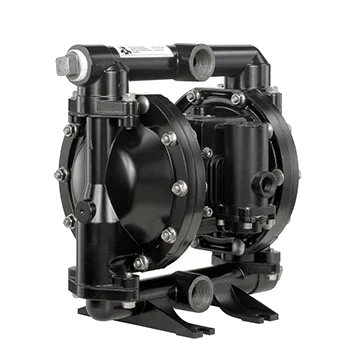
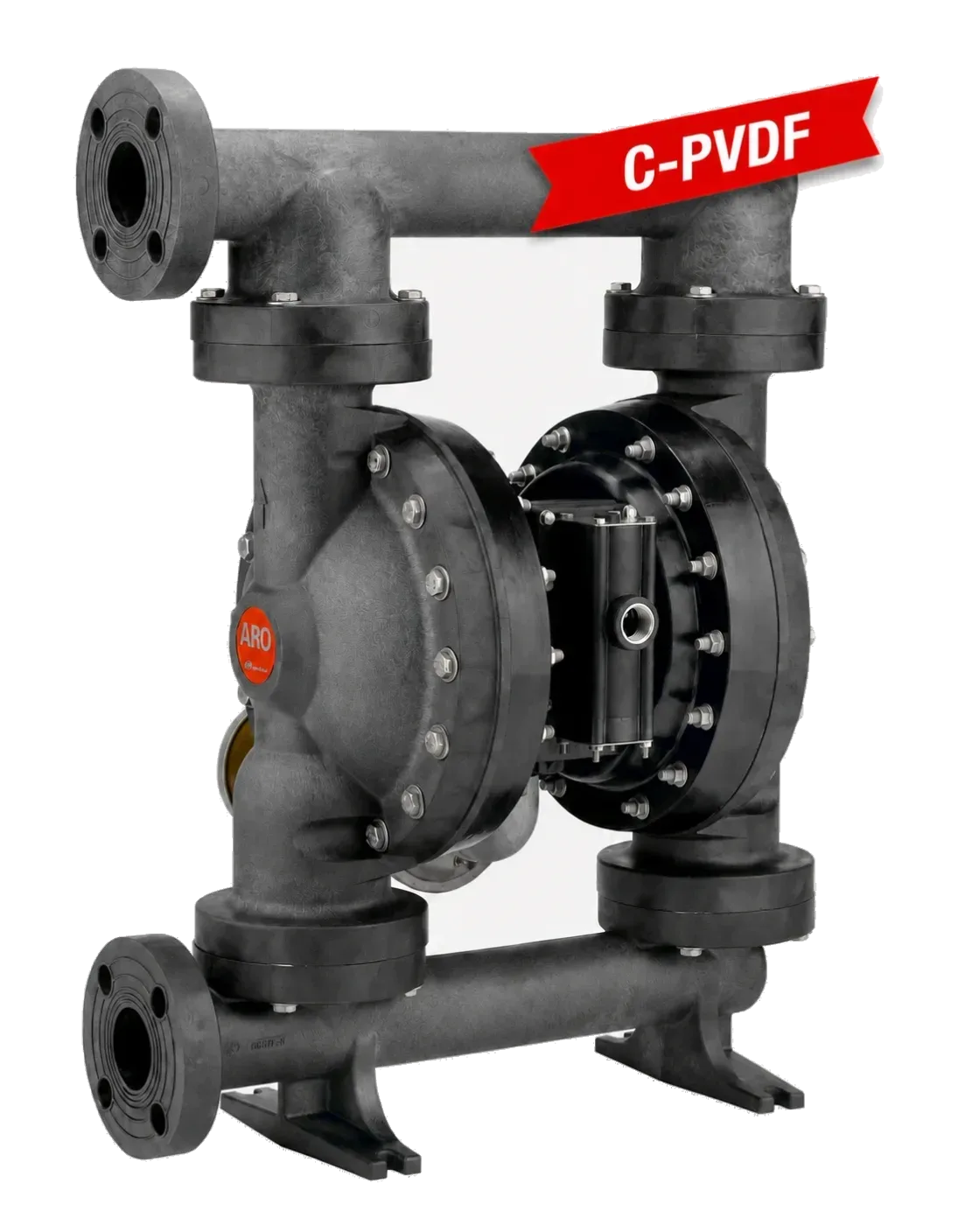
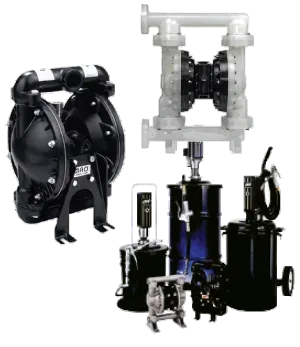
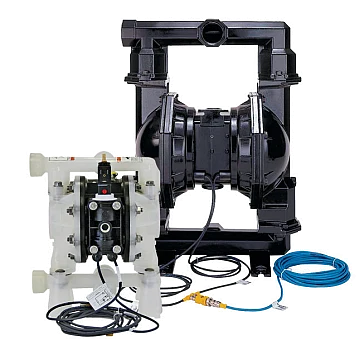
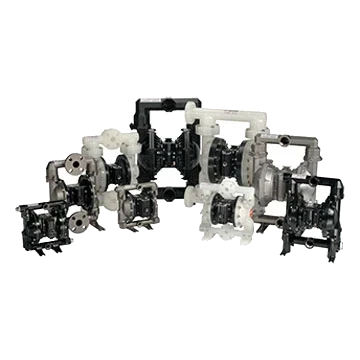
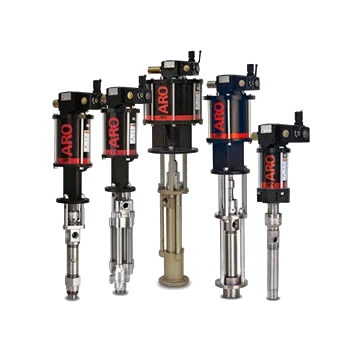
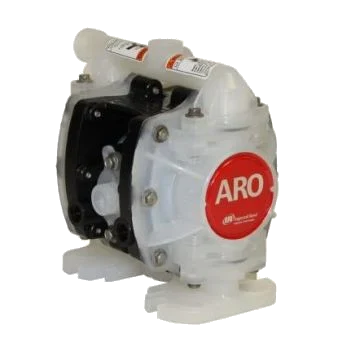
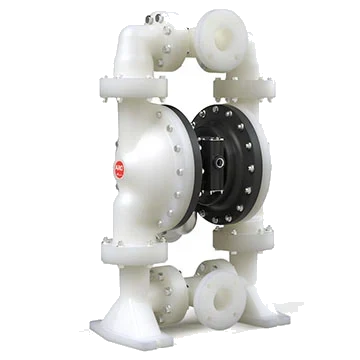
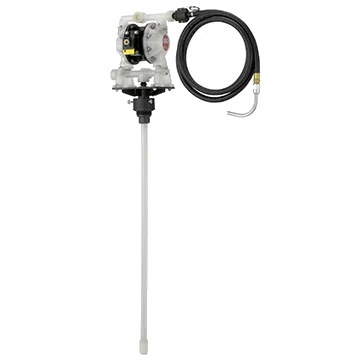
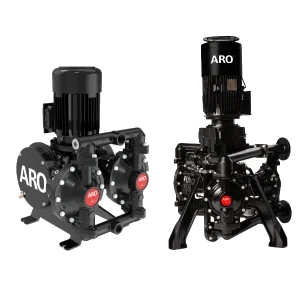
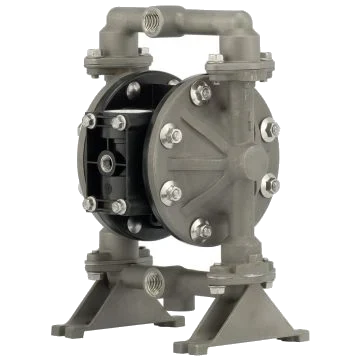
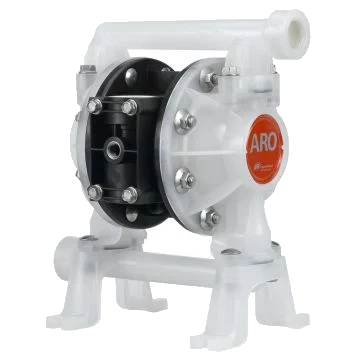
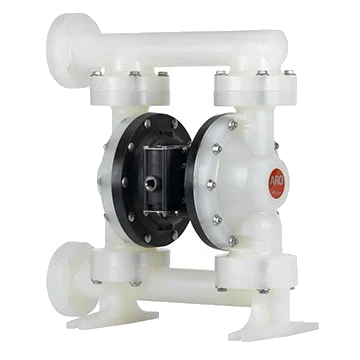
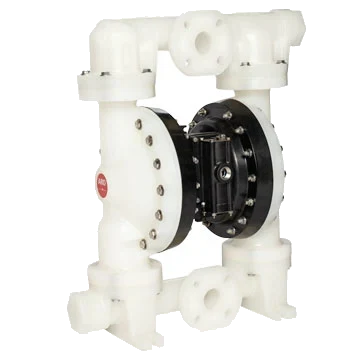
DRN stocks both families for that reason. Centrifugals cover transfer, circulation and lift duty. ARO air-operated diaphragm pumps accept run-dry service and stations with no electrical supply. Neptune metering pumps inject a set volume, to a manufacturer-published accuracy of plus or minus one percent. Describe the liquid, the flow you need and the head you have to clear, and our specialists will tell you which of the three families applies before any model is discussed.

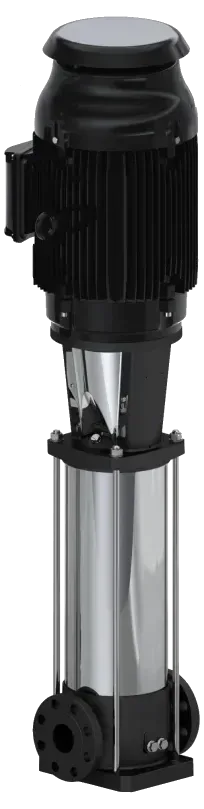
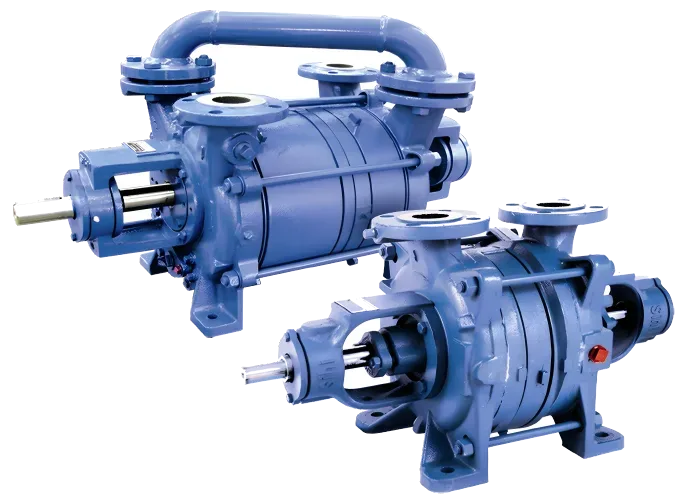
They sort first by shaft orientation, then by stage count and suction arrangement. Horizontally, the end-suction volute pump covers most process transfer duty, while the double-suction horizontal split case absorbs the large flows of municipal water and fire protection service. Vertically, the submerged turbine draws from a well or a deep sump, and the in-line pump drops straight into the pipe run. A single stage produces moderate head. Multi-stage units stack impellers to reach high pressure at low flow.

The choice narrows further at the impeller. A closed impeller gives the best efficiency on a clean liquid, a semi-open impeller tolerates fibre and grit, and a recessed impeller passes a solid almost as large as the flange. Specific speed then says whether the geometry suits the flow and head pair being asked for, and it is specific speed that explains why an oversized pump vibrates instead of producing.

The lines DRN stocks cut across those categories. Peerless Pump builds the horizontal split case for municipal water, fire protection and HVAC duty. Grundfos covers circulators, end suction, multi-stage and submersible units. Labour Taber adds the vertical turbine and the Canadian-built split case. FMC Technologies covers the horizontal centrifugal built to API 610 dimensions for refining and petrochemical service. Tell us the orientation your plant room imposes and the list shortens immediately.

Suction geometry and footprint decide this, not preference. A horizontal pump is aligned, grouted to a foundation and opened for service without breaking the pipe run. It is the default where liquid arrives under a flooded suction. A vertical pump takes up little floor area and reaches a water level below the machine, which a horizontal cannot do beyond its priming capability. A submersible works flooded, with no suction lift to make up, and suits sumps and lift stations.

One detail weighs more than it looks. A horizontal pump that is misaligned or pulled by its piping will wear out its bearings and its seal within months, however good the pump itself is. A vertical pump moves that stress into the column and the intermediate bearings, which need proper guidance. A submersible escapes alignment altogether, but its cable, its float and its cooling arrangement become the fragile parts instead.

Each choice moves the maintenance burden somewhere else. The horizontal is the easiest to align and to rebuild on a bench. The vertical commits you to a pump pit and a column. The submersible has to come out of the sump for any work at all. DRN assembles, repairs and overhauls all three arrangements, and holds wear parts for the most requested models on the shelf, including older machines the manufacturer no longer supports.

NPSH is net positive suction head. Available NPSH is what your installation actually presents at the suction flange, once vessel pressure, static lift, friction loss and the vapour pressure of the liquid at its working temperature are accounted for. Required NPSH is what the impeller needs in order not to cavitate. Available has to exceed required, with margin. Below that margin the liquid flashes at the impeller eye, the bubbles collapse against the vanes, and the impeller is eaten away within months.

An example makes the margin tangible. Water at twenty degrees leaves plenty of room, while the same water at eighty degrees gives up most of the available NPSH, because its vapour pressure has climbed. A liquid carried near its boiling point, a vessel under vacuum, or a partly blocked strainer all do the same thing. Measure the real working temperature rather than the nameplate temperature, because the real one is what decides.

Cavitation is heard before it is seen. A gravel noise, flow falling away, seals weeping. Replacing like for like rarely fixes it. The calculation has to be redone, and sometimes the pump is lowered, the suction line enlarged, the impeller changed for one with lower required NPSH, or the whole arrangement moved to a vertical or a self-priming unit. Our specialists redo that calculation from your own figures before proposing a machine, because a well chosen pump on a bad suction fails exactly like the one it replaced.

A centrifugal should not run against a closed valve, nor far below its best efficiency point. The manufacturer publishes a minimum continuous flow, usually as a percentage of that point. Below it, energy not transferred into the liquid turns into heat inside the volute, internal recirculation loads the bearings, and radial thrust deflects the shaft. On a multi-stage pump the margin is tighter than on an end-suction unit, and on a high-energy pump a few minutes are enough to mark the impeller.

The proof is readable on the installation. Take the discharge and suction pressures, convert the difference into head, then put that point back on the curve of the impeller actually fitted. If the point sits well to the left of the efficiency peak, the problem is the operating regime and not the pump. A clamp meter on the motor usually confirms it, because absorbed power falls together with flow on a centrifugal.

This is one of the most common failure causes and one of the least often diagnosed, because the pump is running and appears to work. The remedies are well known. A recirculation line, an impeller trimmed to the right diameter, a variable speed drive, or a smaller machine in parallel for slack periods. If your bearings or seals give out at regular intervals with no obvious cause, describe the real flow profile over a day. The fault is often at the low end of the curve rather than in the pump.

Three different constraints, three different answers. An abrasive slurry needs a pump built for wear, with a wide passage, reduced peripheral speed, thick wear parts in chrome iron or elastomer, and a solids passage matched to the real particle size. A corrosive liquid needs the right wetted material first, stainless, Hastelloy or a specialised alloy, then a sealing arrangement that survives that medium. A hazardous liquid needs the seal removed, and magnetic drive then confines the fluid inside a closed containment shell.
One concrete figure steers the choice. Abrasive wear varies roughly with the cube of impeller peripheral speed, which is why a slurry pump runs slowly with a large impeller rather than quickly with a small one. On the chemical side, it is the pairing of concentration and temperature that decides the material, not the name of the product. A dilute acid and the same acid concentrated do not call for the same alloy.

DRN covers all three axes with separate lines. Wemco Pump builds the horizontal and vertical slurry pump for mining and mineral processing. Magnatex builds the sealless magnetic drive pump, including in the ANSI envelope, for chemical, pharmaceutical and hazardous fluid duty, in stainless and exotic alloys, and can convert an existing sealed pump. Send us the liquid analysis and the particle size, not only the trade name, because material selection follows composition.
These are two families of dimensional and construction standards. The ANSI standard, usually cited as B73.1, fixes the mounting dimensions of an end-suction process pump, meaning the flanges, the shaft centreline height and the foot position. Two ANSI pumps of the same size are therefore interchangeable on the same baseplate, whichever manufacturer built them. API 610 addresses refining and petrochemical service and asks for more, meaning heavier construction, vibration and temperature limits, and requirements on bearings, sealing and acceptance testing.

The difference shows up in the shop. An ANSI pump is back pull-out, so the rotating element comes out without disturbing the casing or the flanges, and the interchangeable dimensions are fixed by the standard. An API 610 pump adds a centreline-supported casing, a rigid baseplate and a far wider temperature range. A specification that cites one or the other has therefore already settled half the selection.

The point is practical. An ANSI specification lets you swap one pump for another without touching the pipe run or the baseplate, which shortens a planned outage. An API 610 specification commits you to a heavier class of machine, held to tolerances that hot and flammable processes require. Magnatex offers the ANSI envelope in a sealless version, and FMC Technologies the horizontal centrifugal to API 610. Tell us which of the two your specification calls for, and the selection starts from the right family.

Where to go next

This page covers the equipment class. The supplier pages go further: each one details the families, sizes and materials of a single manufacturer, with the models we stock. Follow the one that matches your application, or the neighbouring category when the need is vacuum duty or repair.

Have your pump selection reviewed

A pump chosen from a data sheet alone usually ends up running off its curve. A pump chosen from your own process figures holds its efficiency, its seals and its maintenance schedule. Send us your duty point and get a documented selection back.